Thursday, September 17, 2009

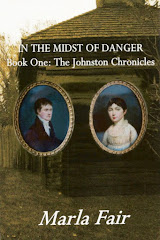
Julia Johnston Patterson, Matriarch 1811-1897


Julia Johnston was born August 16, 1811 at Upper Piqua, OH. She was the first of the Johnston children to be born in the new brick house. Julia, the fourth girl in the family, tended toward a melancholy disposition and had, as her father put it, ‘no taste for a farmer’s life’. She escaped the farm by marrying Jefferson Patterson of Dayton, Ohio on February 26, 1833 in a lavish ceremony that brought chefs to the Piqua farmhouse. The newlyweds lived at the Rubicon Farm in Dayton, part of which is now the Patterson Homestead. Two of Julia’s sons, John Henry and Frank Patterson, were the founders of National Cash Register or NCR in Dayton.

Julia was asked, as an older woman, to write her memories of the Upper Piqua farm. Thanks to her doing so, we have wonderful anecdotes about her grandmother taking care of the children's pet deer (after it had broken its ankle while stealing a sip of milk in the springhouse), and about the Johnston children baking poundcake, feeding the chickens and - once in a while - turning their mother's hair prematurely gray by finding Indian scalps hidden in a blockhouse.

Julia johnston Patterson died May 29, 1897 at age 85 about a month after suffering a broken hip. She was one of Ohio's last remaining pioneers.


Julia Johnston to Jefferson Patterson – Piqua July 1, 1833

I arose this morning in rather low spirits from some cause or other, I scarcely know what, but thought it would go off as it usually does in the course of an hour and then I would write to you, but I have waited until this evening and still my spirits are below par.


John Johnston to Jefferson Patterson, Upper Piqua, Sept. 6, 1833

There is nothing more unprofitable in this country than carrying a farm entirely by hired labour , and in point of vexation and want of comfort there is nothing to be compared to it, it is a continual scene of uneasiness. If you value your own comfort and happiness and that of your wife, have nothing to do with such things. She has no taste for a farmer’s life, and although raised on a farm, she knows nothing of the duties belonging to the station.

Wednesday, August 12, 2009

Rosanna Johnston, 1809 - 1844, A simple gift


John and Rachel Johnston's fourth child, Rosanna, was born at Fort Wayne in the Indian Territory on July 2nd, 1809. Named after her maternal grandmother, Rosanna Robinson, the Johnston's third daughter was disabled. Her 1844 obituary states ‘the deceased had been as child of affliction from infancy’. There is no record of what ‘affliction’ Rosanna suffered, but one could assume her disibility came as a result of a common childhood illnesss such as measles. Rosanna was not so severely disabled as to be prevented from traveling and entering into other activities with her sisters, but there seemed to be no thought that she would ever marry or live anywhere other than with her family. Toward the end of her life Rosanna suffered epileptic fits. She died suddenly at home on August 11, 1844. She was 35.


John Johnston to AR Johnston, Columbus, Ohio Feb’y 3, 1831

Rosanna and John has not been well lately. The former has been disturbed with a kind of fits.


John Johnston to Jefferson Patterson Tuesday August 13, 1844

She done almost all the milking, churning, scrubbing, etc. My poor good tender-hearted child.


Ibid.

After leaving you on Monday and proceeding about 5 miles this side of Dayton, I met a messenger going in pursuit of me, with the melancholy intelligence that my poor afflicted child, Rosanna, was dead. She went to bed as usual on Sunday night and was found lifeless in her bed in the morning. I suppose she must have perished in one of those spasmodic fits to which she has been of late years subject. God for wise and holy purposes has doubtless taken her from the trouble to come. Ever since the death of her dear and most excellent mother, she has led a life of misery. No one to look to her wants and watch over her imperfections.

Wednesday, August 5, 2009

Hello!


Hello Bloggers! My name is Diana and I work in the museum at the Piqua Historical Area, home of the Johnston Farm. I have been here for about 4 years and have learned a lot from many different resources. I will endeavor to keep you up to date about the various events, people, and random things that happen here, and hopefully entertain you as well. (Also, if you would like to add anything, say write about how fabulous your visit to the museum or house was, or how cool the mules are, feel free to add a comment.)

First, and this is a little late in coming, we had a totally awesome spring school season! We had almost 2500 students from all over western Ohio (and even Indiana!) visit our site. We enjoyed having them visit and hope they had fun and (hopefully) learned something new!

What do they learn about while here? Well, they learn about 1800s pioneer life by visiting and touring the home of John Johnston, Indian Agent, Canal Commissioner, and gentleman Farmer. They come down to the museum and learn about Ohio’s Native Americans and their first contact with European Traders, including a little bit about the first shopping mall in Ohio, Pickawillany. And last but not least, the students learn about the building and impact of the Miami and Erie Canal on the development of Ohio, and even get to RIDE ON A REPLICA CANAL BOAT!!! Is that beyond cool or what?

Teachers, if this sounds like something you would be interested in experiencing, or if you would like more information, please call 773-2522 or 800-752-2619. We still have some open spots for fall 2009 and spring 2010!

Thursday, July 16, 2009

Life on an Indian Agency July event report


This season we introduced a new July event, Life on an Indian Agency. Everyone who attended had a great time learning just what it took to operate a United States Indian Agency in the early to mid-1800s. John Johnston's tenure as an agent ran from 1802 until 1828. Johnston's job made him put on many hats - Native Americans were contacted, worked and treated with, traded with, as well as simply cared for on an agency. Treaties were worked on and completed, negotiations undertaken, but there were simpler everyday tasks to perform as well - Native men and their families were cared for, fed, and given a safe haven in times of need. At one time, during the War of 1812, the members of the Delaware Nation - counting in the hundreds - were brought to Johnston's agency to be cared for on their trek to their new home in the west. As might be expected, the local inhabitants of the nearby city of Piqua were not too happy. They even went so far as to petition the governor of Ohio to have the natives removed.

The event this weekend touched on many of these things. Jim Johnson of Troy, a member of the Shamanic Institute, represented the native aspect. Set up in the Indian Agency office, Jim spoke of native beliefs and customs while helping anyone who wanted to, to make a medicine bag. Sycamore Springs Clothiers, owner and operated by Beverly Smith and Kitty Thompson, represented the trade end of the business. Johnston carried many items on his land for trade. John Heater and Sheri Barhorst were on hand to demonstrate European and Native weaving. Nancy Weatherhead worked on the lucette, creating a knotted cord as Mrs. Johnston and her daughters would have done.

The day's special feature was a talk given by Robert Bowman on the Johnston's son, Abraham Robinson Johnston. Known to the family as Robinson, he was killed during the pivotal battle of the western campaign of the Mexican War, dying in 1846 at the Battle of San Pasqual. Bob used a powerpoint presentation to showcase the all too brief life and death of John Johnston's second son. Also in attendance that day were Richard Rozevink and David Bennett representing the agency during the War of 1812, when General William Henry Harrison was encamped at Upper Piqua before going to free Fort Wayne (IN) from the seige laid to it by the British and opposing Indians.

This event will repeat in the 2010 season with a special first person presentation of John Johnston's mother, Elizabeth Bernard Johnston. Elizabeth will speak of what it was like for the family to live in an agency house and to deal with the danger brought to it by the war.

Mark your calendars!


Monday, July 6, 2009

Elizabeth Johnston Jones 1807 -1878, Queen of the Queen City


On September 22, 1807 Elizabeth Johnston was born in blockhouse #1, Fort Wayne, IN. At the time Fort Wayne was still, literally, a fort. She would have come into the world when her father John was US Factor to the Indians. Her earliest years would have been spent in the company of her brother Stephen, for her sister, Rebecca, died approximately 6 months before she was born. This made Elizabeth, the eldest daughter of the family. As such, as a young girl and teen, she seems to have been the little 'mommy' to her younger siblings. Elizabeth's existing letters reveal a woman who cares deeply for her extended family and is concerned about the proper order of things. These traits epitomized her adult life as the wife of John D. Jones of Cincinnati, one of the Queen City's premiere merchants.

Elizabeth was married on her sixteenth birthday to John Davies Jones, ten years her senior, in the Upper Piqua farmhouse September 22, 1823. While marriage near this age was not unusual in the early 1800s, she was still a very young bride. The household she kept in Cincinnati would have taken all of her young attention and energy to manage. Elizabeth and her husband supported the city’s many charitable organizations, including founding an institution for orphans, and their children were involved in the bank and railroad industries, several serving as presidents of major companies. Three of her sons served the Union side in the War Between the States. Col. William Graham Jones was killed in action at the Battle of Chickamagua, TN

Living in Cincinnati, the family was subject to the frequent outbreaks of cholera common to the time. The losses - which included three daughters lost in a period of less than two years -seem to have left Elizabeth's physical strength fragile. Her brother Stephen expresses concern for her in several of his extant letters, wishing she could avail herself of the 'sulfurous waters' in order to heal. As eldest surviving child of John Johnston, she served as her father’s executor. Elizabeth died November 19, 1878, at the age of 71 and is buried in Cincinnati.


Catharine Johnston Holtzbecher to A. R. Johnston, Cincinnati Sept. 23rd, 1840

My dear Brother,
I wrote you some time since if you had no objection I would take the money after paying your debts and purchase some articles for sister Margaret. I waited until yesterday for answer and decided not to wait any longer as I was going to Piqua. Supposing you would be glad to do anything for her in your power I purchased a handsome shawl and breast pin enclosing our dear mother’s hair for her and some other small articles she had need of. Write to me soon and tell me if I have done what is proper. Good bye and believe me your affectionate sister.
Elizabeth Jones
AR Johnston

John Johnston to AR Johnston, Columbus Ohio Dec. 20, 1834

Elizabeth had the great misfortune to loose her only daughter and namesake by the cholera somewhere about the beginning of the last month. Being the third child she has buried her health since has been bad, but the last account she was recovering from the effects of her trouble.

Stephen Johnston to John Johnston July 19th, 1847

I was desirous that Sister Elizabeth should have joined us. I believe that these baths, with the use of the Sulfurous waters afterwards, would have done her great service.

Thursday, April 30, 2009

Rebecca Johnston I, 1805-1807, the lost child


Last month, I ended my post on Stephen Johnston by stating that his sister, Elizabeth, would be the focus of the second post in the series on the Johnston children. In doing so, I did disservice to the Johnston's second child, a little girl who lived less than three years. In the annals of history, this is but a heartbeat - if that. Still, Rebecca was once a living, breathing, laughing and loving child and as such, deserves to be remembered.

And so, here is the story of Rebecca Johnston I.

John and Rachel Johnston's second child, Rebecca, was born September 03, 1805 at Fort Wayne in the Indian Territory (present day Fort Wayne, IN). Like her sister, Elizabeth, it can be assumed that Rebecca was born in the safety of one of the fort's blockhouses, though this is not known for certain. Of all the Johnstons' children we know the least about Rebecca. According to the family Bible, she died April 26th, 1807 at the tender age of 2 years, 7 months and 23 days. Fort Wayne, like any far-flung frontier outpost, was filled with sickness, or what were known as 'billious' fevers. In a letter dated 1804, John Johnston states that ‘for twelve months I had it with scarcely any interruption, every summer it is looked for as regular as the season comes. Nothing but my poverty and the circumstances of the Secretary of War having placed me here would have induced me to continue at this place on account of its unhealthiness.’ Another letter of the same time relates that his wife, Rachel, has also been ill. Most likely, the baby, Rebecca, died of one of these fevers.

When one studies the past, it quickly becomes apparent that the death of a child was not an uncommon thing. In fact, it was to be expected. The average for the era the Johnstons lived in was that half of a family's children would die under the age of six. So did that make the loss any easier to accept than it is today? A letter of John Johnston's recently found and transcribed seems to answer that question. It is written to his daughter, Mary Reynolds, and dated 1852. After speaking of the recent burial of her brothers Robinson and Stephen, and of her younger sister, Margaret (all of whom died within three years of each other in the 1840s), John states: 'All my loved dead are there now in one enclosure, except that dear child who died at Fort Wayne 50 years ago, and which I once endeavored in vain to recover, the War of 1812 having obliterated all localities.' Fifty years had passed, but John Johnston still regretted having to leave Rebecca behind.

There is a marker in the family cemetery with Rebecca's name on it. In this way, John Johnston made certain his eldest daughter, brief as her life was, would never be forgotten.


Next time: Elizabeth Johnston Jones

Thursday, April 9, 2009

Stephen Johnston, Son of the Sea 1803-1848 by Marla Fair


Our series on the children of John and Rachel Johnston begins with their eldest son, Stephen.

Stephen Johnston was born April 02, 1803 in Fort Wayne, IN during the time his father, John, served as United States Factor to the Indians. At the time, the Johnstons lived in the Factor's House near the fort, which was a two story building. The family occupied the upper level. Cooks, interpreters and Indians occupied the lower floor. It is likely Stephen was born in one of the fort's blockhouses as his sister, Elizabeth, was years later, though we have no proof of this. Fort Wayne at the time was a typical frontier post replete with natives, soldiers, traders and trappers and it may have been deemed safer for a woman to give birth within the fort itself. Fort Wayne Gateway of the West 1802 – 1813: Garrison Orderly Books Indian Agency Account Books, 1927 , is filled with references to court-martialed officers, brawls, and duels being fought in the streets. It must have been an exciting if dangerous world for a young boy to grow up in.

Stephen Johnston was 8 years old at the time the family move to the farm at Upper Piqua. During the years Piqua served as the Indian Agency for the Shawnee and several other tribes, John Johnston was often gone for weeks, even months at a time. Stephen, as eldest son, would have had to grow up quickly and to shoulder adult responsibilites at a young age. This may explain why he entered the navy - his chosen career - at a much older date than most.

Stephen Johnston left home in 1823 at the age of 20 to join the United States Navy. His early years as a midshipman found him patrolling America's coasts. In 1830, just before being promoted to lieutenant, he took a trip to Russia. In 1838 Stephen Johnston and Elizabeth Clark Anderson were married in Louisville, KY. Elizabeth Clark Anderson was the great-niece of George Rogers Clark. A short time later the couple were parted when Stephen’s naval career resumed.

For the next few years, Stephen was stationed in the states and had some hopes of obtaining a position that would keep him permanently on land. According to a letter written by his father, John, these hopes were futile. The men of the family were committed Whigs, John remarked, and, as such, out of favor with those in power. Shortly after this, Stephen recieved orders to report to sea for what would prove to be his final voyage.

Stephen Johnston was appointed First Lieutenant of the ship Columbus, the flagship of the East India Squadron, under the command of Commodore Biddle. From 1846 to 1848 the Columbus traveled to China and Japan and was instrumental in beginning trade with both nations. Some time during this voyage, Stephen took ill. The nature of his illness is unknown, though the symptoms mimicked tuberculosis. Stephen was sent to the Sulphur Springs in Virginia in hopes of improving his health, but his condition continued to disintegrate and he died in Louisville Kentucky in 1848 at the age of 45.

Stephen and his wife had three daughters. Nell died in infancy. Hebe and Elizabeth (known as Lily) both lived and married.


Stephen Johnston to John Johnston, May 10, 1833

Partly owing to my time being much employed, and partly to our sailing sooner than I had expected, I did not write you from Norfolk. All the ladies is (sic) seasick which circumstances does not make them more beautiful or interesting. I like the ladies on shore everywhere but at sea, with my will, not one ever should get afloat.

Stephen Johnston to AR Johnston, Brooklyn, May 2, 1841

We this morning received the letter which I send you now bringing the melancholy intelligence of the death of our Poor sister Rebecca at a time when her hopes and wishes for the future were excited to the highest degree…. In a few short months we as a family have been called upon to mourn the departure of two of our nearest relatives, a melancholy event that has not taken place in the same circle for the thirty three years proceeding…. Within the range of my knowledge I do not now recollect an instance when a family had been so highly favoured by kind Providence by the absence of death among its members as our own.

Next installment: Elizabeth Johnston Jones, Cincinnati royalty